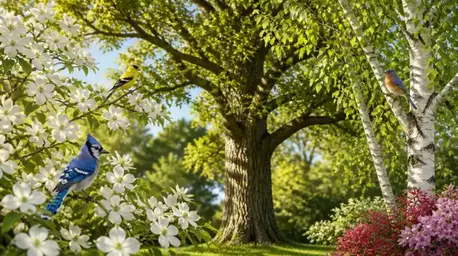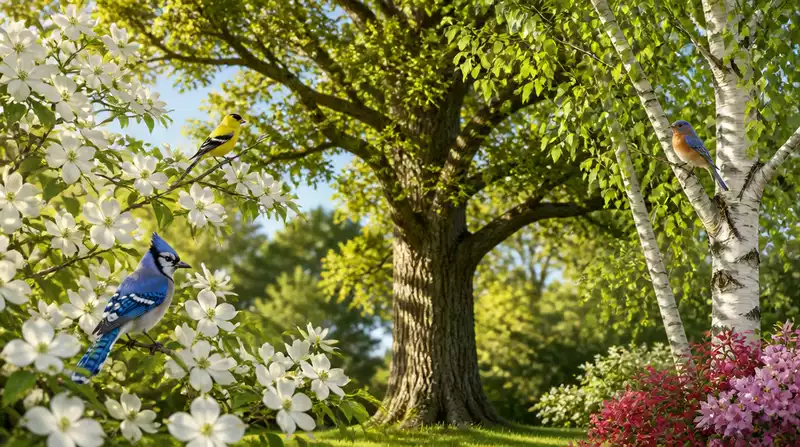
Key Food Sources Provided by Native Trees
- Fruits (e.g., serviceberry, crabapple)
- Seeds (e.g., acorns)
- Insects (vital for insectivorous birds)
Did you know that native trees are crucial for the survival of local bird populations? By understanding the role these trees play, you can create a vibrant ecosystem that supports our feathered friends while beautifying your landscape.
Native trees provide essential resources for local birds, ensuring their survival and enhancing biodiversity. For more information on how to select the best species, consider choosing native trees for planting in your area.
Dense branching offers:
These birds thrive in specific tree environments:
Essential for:
When we think about creating a vibrant ecosystem, the role of native trees cannot be overlooked. These trees are not just beautiful additions to our landscapes; they are essential for the survival of many local bird species. By choosing native trees, we can help foster habitats that provide food, shelter, and nesting opportunities, allowing our feathered friends to thrive in their natural environments.
At Timber & Thrive, I believe in the profound connection between trees and birds. When we plant native species, we are not only enhancing our own backyards but also creating a sanctuary for the wildlife around us. It’s a win-win for everyone involved!
Native trees play a crucial role in establishing a healthy bird habitat. They provide a rich source of food through fruits, seeds, and insects. Birds rely on these resources not just for nourishment but also for their survival during different seasons. Additionally, native trees create complex ecosystems that support various bird species. They offer the right kind of environment for nesting and raising young, making them indispensable in maintaining local bird populations. To ensure your trees are thriving, learn more about nurturing trees for healthier growth.
Every native tree species has its own unique contribution to the ecosystem. For instance, oak trees are known for producing acorns, which serve as a vital food source for many birds. Similarly, flowering trees provide nectar for hummingbirds and other pollinators.
Moreover, the structure of native trees often offers shelter from predators and harsh weather. Birds can find safety among the leaves and branches, allowing them to thrive in their habitats. When we choose native trees, we are essentially providing a safe haven for our avian friends.
One of the most significant advantages of native trees is their dense branching, which is ideal for nesting. Many bird species prefer to build their nests in the thick foliage of native trees, where they can hide from predators. This natural concealment is crucial for the safety of their young.
Additionally, dense branching not only provides the right nesting sites but also contributes to a more diverse bird population. Different species have unique preferences when it comes to nesting, and the variety offered by native trees can accommodate these needs, resulting in a lively ecosystem.
Understanding the specific needs of local bird species is essential for effective conservation. Different birds have varying habitat requirements, which can influence the types of trees we should plant. By focusing on native trees that attract these birds, we can create a welcoming environment for them.
At Timber & Thrive, I often encourage people to observe the birds in their neighborhoods. Each species comes with its own set of preferences, and knowing these can help us select the right trees for our communities.
Here are some common local birds and what they typically prefer in their habitats:
Supporting native bird populations is vital for maintaining ecological balance. Birds play a significant role in pollination, seed dispersal, and pest control, all of which contribute to healthy ecosystems. By planting native trees, we can ensure that these birds have the necessary resources to flourish.
Furthermore, healthy bird populations are indicators of environmental health. When we provide the right habitats, we are not only helping birds thrive but also supporting the overall well-being of our ecosystems.
Insectivorous birds, like warblers and swallows, depend on insects for their diet. Native trees often host a variety of insects, providing essential food sources for these birds. By planting native trees, we can create rich environments that support these vital species.
Foraging birds, on the other hand, such as woodpeckers and jays, seek out seeds, nuts, and berries. Having a diverse range of native trees can attract these birds, ensuring that they find the food they need throughout the year. Understanding these interactions is key to building biodiverse habitats with trees.
Here's a brief recap of the key points discussed so far:
A: Native trees are inherently better because they have co-evolved with local bird species, providing the specific food sources (fruits, seeds, insects) and nesting structures that birds need. Non-native trees often lack these vital ecological connections, offering fewer resources and sometimes even harming local ecosystems.
A: Native trees offer a variety of food sources, including fruits like those from serviceberry and crabapple trees, seeds such as acorns from oak trees, and a rich abundance of insects that are crucial for insectivorous birds like warblers.
A: Dense branching provides essential natural concealment from predators, making them ideal nesting sites for many bird species. This protection is vital for the survival of eggs and young birds, contributing to a more diverse and thriving bird population.
A: The American Robin prefers fruit-bearing trees, while House Sparrows favor dense shrubs for nesting. Cardinals enjoy thickets with a mix of deciduous trees. Understanding these preferences helps in selecting the most beneficial native trees for your area.
A: The first year is crucial for new trees. Essential care includes deep watering once a week, especially during dry periods, applying mulch to retain moisture and suppress weeds, and monitoring for pests and diseases early on. Proper pruning also helps promote healthy growth.
Planting trees that support local bird populations is a wonderful way to contribute to our ecosystem. At Timber & Thrive, we believe that every tree planted is a small step towards a healthier environment. Let’s explore some practical steps for establishing and caring for bird-friendly trees that can make a big impact!
The first year is crucial for the success of your newly planted trees. Proper care during this time sets the foundation for healthy growth and ensures that your trees can provide excellent habitats for birds in the future. Watering is essential; make sure to keep the soil moist, especially during dry spells!
In addition to watering, regular maintenance is key. Here are some important guidelines to follow:
Pruning is another important aspect of caring for your trees. It helps shape their growth and can prevent overcrowding, which is essential for attracting birds. To promote healthy growth:
Choosing the right species is vital for the health of your local ecosystem. Invasive tree species can disrupt the habitat and food sources for local birds. Let’s identify some common invasive trees to avoid:
Opting for native trees can significantly benefit local wildlife. Native species are better suited to the local climate and soil conditions, providing optimal habitats and food sources for birds. They support biodiversity and help maintain a balanced ecosystem! For more comprehensive advice, delve into sustainable tree care practices.
Connecting with fellow nature enthusiasts can enhance your tree-planting experience and expand your knowledge. Here are ways you can engage with the local bird community:
Encouraging bird watching in your community not only fosters appreciation for nature but also inspires stewardship. When people see the beauty of local birds thriving among healthy trees, they may be motivated to support conservation efforts, just as we aim to do at Timber & Thrive.
Are you ready to make a difference? It’s time to take action! Here are some steps you can follow after reading this article:
To continue your journey in sustainable planting, look for resources that align with your goals: local conservation organizations often offer workshops, and community gardens are great for hands-on learning. Working together, we can create a greener future for our feathered friends and the planet! Consider how starting a community tree project can amplify these efforts.
So, what tree will you choose to plant today? Remember, every tree counts in nurturing our environment and supporting our local birds. Let’s thrive together—one tree at a time!
Here is a quick recap of the important points discussed in the article:
Celia Greenwood is a dedicated environmentalist and tree care expert with a passion for promoting sustainable practices. With years of experience in eco-friendly planting and tree preservation, Celia aims to educate and inspire others to embrace environmentally conscious choices. Her mission is to foster a community that values trees as vital components of our ecosystem, ensuring a greener future for generations to come.