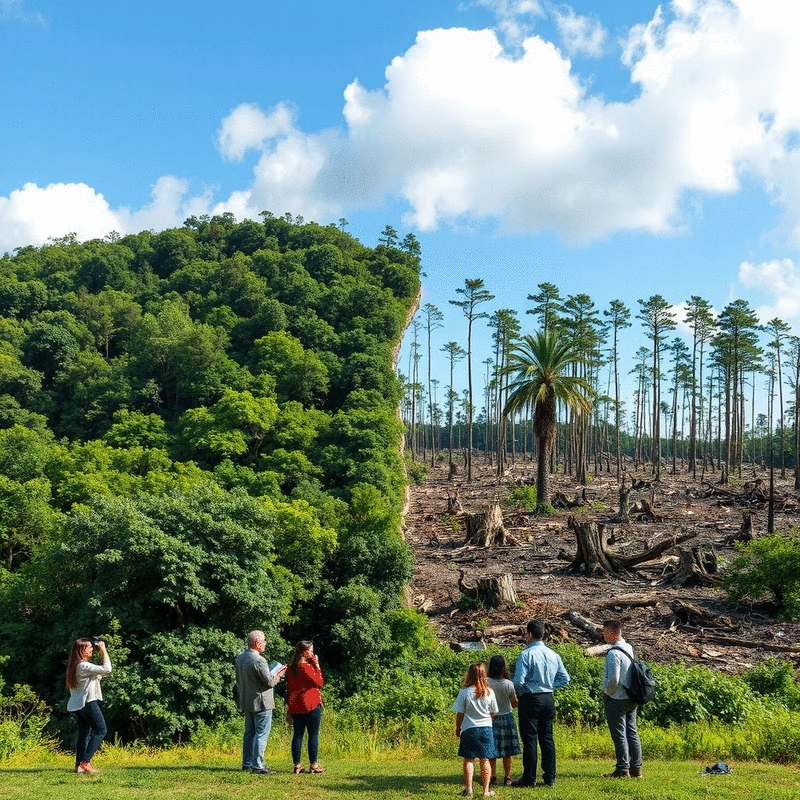
Forest Area Decline
The world's forests decreased by 1.3 million square kilometers from 2000 to 2018.
Did you know that the world loses approximately 10 million hectares of forest each year—equivalent to around 27 soccer fields every minute? This alarming statistic highlights the urgency for us to understand and address deforestation for the sake of our planet's future.
Understanding the significant rates and effects of deforestation is crucial for evaluating its impact on biodiversity and climate change. Below are some important numbers that highlight the urgency of addressing this issue.
The world's forests decreased by 1.3 million square kilometers from 2000 to 2018.
We lose about 10 million hectares of forest annually, which equates to approximately 27 soccer fields per minute!
Over 80% of terrestrial species live in forests, making their survival crucial.
Deforestation accounts for nearly 15% of global greenhouse gas emissions.
Deforestation is more than just a buzzword—it's a critical issue impacting our planet's health. It refers to the large-scale removal of trees from forested areas, often for agricultural, urban, or logging purposes. As someone who deeply cares about our environment, I believe understanding this concept is crucial for fostering a community that values and protects our trees. For more on how we can protect our trees, check out these sustainable tree care practices.
Globally, deforestation has significant implications for biodiversity and our ecosystems. Forests act as vital habitats for many species, and when they are destroyed, we risk losing these incredible creatures forever. It’s alarming to think about how our choices today can shape the world for generations to come, which is why I feel so strongly about raising awareness around this topic.
Deforestation primarily happens when trees are cut down faster than they can grow back. This process not only diminishes forest cover but also impacts our climate and wildlife. With forests covering about 30% of the Earth's land area, their loss signals a significant shift in the balance of nature, affecting everything from air quality to local water cycles.
In many regions, the significance of deforestation extends to economic factors, too. For developing nations, forests often provide resources and jobs. However, the short-term gains can lead to long-term environmental damage. Organizations like Timber & Thrive advocate for sustainable practices that not only protect our forests but also support local economies. Learn more about the economic effects of deforestation.
According to recent studies, the world loses about 10 million hectares of forest annually, which equates to approximately 27 soccer fields per minute! This staggering rate highlights the urgency for intervention. Not only does this loss impact trees but also the countless species that rely on them for survival.
These statistics are more than just numbers; they represent living ecosystems collapsing under the weight of human activity. At Timber & Thrive, we emphasize the importance of nurturing our forests to maintain biodiversity and combat climate change.
Understanding the causes of deforestation is essential for developing effective solutions. Some of the primary drivers include agricultural expansion, logging, and urban development. Each of these activities contributes to forest loss in different ways, from clearing land for crops to expanding cities.
These causes not only affect local habitats but also have a ripple effect on global ecosystems. As someone who deeply cares about the planet, I feel it is vital to address these issues head-on through education and community engagement.
The relationship between deforestation and climate change is troubling. Trees play a significant role in absorbing CO2, a primary contributor to global warming. When trees are removed, not only do we lose this critical carbon sink, but the carbon stored in trees is released back into the atmosphere.
Research shows that deforestation contributes significantly to climate change, with around 10-20% of global greenhouse gas emissions attributed to deforestation. This connection emphasizes how essential it is to protect our forests for the future of our planet. For a deeper dive into this topic, explore deforestation's role in climate change.
As we strive for a greener, healthier planet at Timber & Thrive, I encourage you to consider the impact of deforestation on climate change. Every action we take—whether it's planting trees or advocating for sustainable practices—can contribute to a solution. Together, we can make a positive change for our planet's future!
Here's a brief recap of the key points discussed so far:
Here are some common questions about deforestation and its impact, based on the information discussed in this article:
Taking part in the fight against deforestation can be as simple as joining a local reforestation project. When we come together as a community, we amplify our impact. I believe that by participating in these initiatives, not only do we plant trees, but we also create bonds with our neighbors and spread awareness about the importance of preserving our forests.
Have you ever wondered what it feels like to watch a newly planted sapling flourish into a mighty tree? It's a rewarding experience that connects you deeply with nature! By volunteering your time, you not only contribute to a healthier ecosystem but also inspire others to get involved.
Engaging in local reforestation projects allows you to witness the direct effects of your efforts. Here are a few ways to get involved:
Each action taken is a step toward restoring our planet. At Timber & Thrive, we often share information on upcoming projects. So, keep an eye on our social channels for updates! You can also find more information on local actions against deforestation.
If you're eager to stay informed about deforestation and conservation efforts, signing up for newsletters is a fantastic option. These newsletters provide insights, news, and opportunities to engage with various initiatives. Here’s what you can expect:
Being informed empowers us to make better decisions. At Timber & Thrive, we are passionate about sharing knowledge. By subscribing to our newsletter, you’ll be part of a community committed to creating a greener future!
As we wrap up, let’s reflect on the tools and educational materials available to further your understanding of deforestation. We’ve covered a range of resources, from comprehensive research guides to interactive monitoring tools. By utilizing these resources, you can enhance your awareness and advocacy efforts.
Here’s a quick summary of the valuable resources discussed:
Each of these resources is designed to foster a deeper understanding of the issues at hand, making it easier for you to advocate for change.
Understanding deforestation is vital for everyone. By educating ourselves and others, we can drive meaningful change. Imagine a world where forests thrive, providing habitats for wildlife and clean air for us all. That’s the future I want to work towards, and I hope you do too! Consider learning more about nurturing trees for healthier growth to contribute to this vision.
NGOs play a crucial role in raising awareness about deforestation. They serve as the bridge between communities and global efforts to protect our forests. By supporting these organizations, you contribute to their mission of educating the public and promoting responsible practices. Here are some ways NGOs make a difference:
As a member of Timber & Thrive, I am inspired by the work done by these organizations and encourage everyone to get involved. Together, we can create a powerful movement for change—one tree at a time!
Here is a quick recap of the important points discussed in the article:
Celia Greenwood is a dedicated environmentalist and tree care expert with a passion for promoting sustainable practices. With years of experience in eco-friendly planting and tree preservation, Celia aims to educate and inspire others to embrace environmentally conscious choices. Her mission is to foster a community that values trees as vital components of our ecosystem, ensuring a greener future for generations to come.