Carbon Release
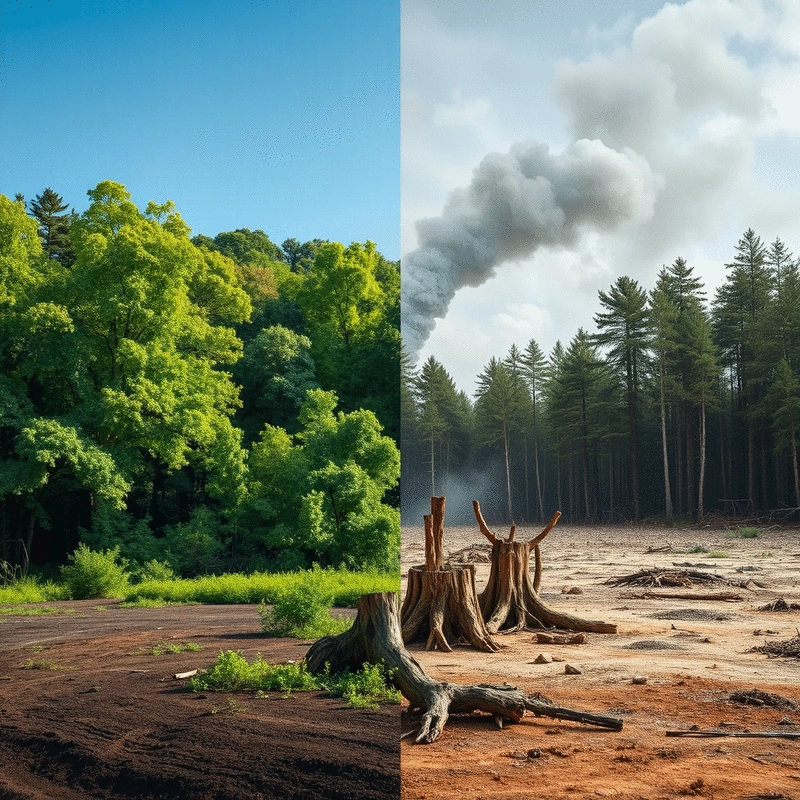
Trees store carbon, and when they are cut down, that carbon is released back into the atmosphere, significantly contributing to global warming.
What if the fate of our planet hinged on the forests we take for granted? The intricate relationship between deforestation and global warming is an urgent issue that warrants immediate attention. As we explore the depths of this connection, it becomes evident that understanding and action are vital. Join us in uncovering the critical lessons from this discussion on deforestation and its far-reaching implications.
Deforestation significantly boosts greenhouse gas emissions, particularly carbon dioxide. Here’s how deforestation contributes to global emissions:
Trees store carbon, and when they are cut down, that carbon is released back into the atmosphere, significantly contributing to global warming.
Land cleared for agriculture can increase emissions of these potent greenhouse gases, further exacerbating climate change.
Land clearing disrupts soil, releasing stored carbon into the atmosphere and contributing to increased greenhouse gases.
Deforestation has dire consequences for carbon storage. Here are some key impacts:
Deforestation can account for up to 10% of total global emissions, highlighting the urgency of addressing this issue.
With trees removed, countless species lose their habitats, threatening the balance of ecosystems and further impacting carbon storage.
Have you ever thought about how our forests are deeply connected to the health of our planet? Deforestation, which is the large-scale removal of trees, plays a crucial role in accelerating global warming and climate change. The act of cutting down trees not only disrupts ecosystems but also releases stored carbon dioxide, a potent greenhouse gas. Understanding this connection is vital for us at Timber & Thrive as we strive to promote sustainable practices that bolster tree preservation and environmental health. For more on how to support healthy tree growth, read about nurturing trees for healthier growth.
When we talk about deforestation, it's essential to grasp that it goes beyond just removing trees. It encompasses the myriad ways we alter our landscapes, often for agriculture, urban development, or logging. Each time a tree is cut down, it’s not just the loss of that tree; it’s a loss of habitat for countless species and a significant impact on climate stability.
Deforestation is the process of clearing forests or trees to make way for other uses. This can be done through various methods, including logging, agriculture, and urban expansion. The impact is profound, as trees are vital for maintaining the balance of our ecosystem, protecting wildlife, and providing us with clean air.
If you're wondering what happens when we lose forests, consider this: trees absorb carbon dioxide from the atmosphere. When they’re removed, all that stored carbon is released back into the air, contributing to global warming. At Timber & Thrive, we believe it's crucial to educate ourselves and take action to protect our forests, which are essential for a healthier planet.
Global warming refers to the long-term rise in Earth's average temperature due to increased levels of greenhouse gases, primarily from human activities. Climate change encompasses broader changes in climate patterns, including shifts in precipitation, sea-level rise, and extreme weather events.
Here’s a quick rundown of some key components of climate change:
Forests are often referred to as carbon sinks because they absorb more carbon dioxide than they emit, acting as a buffer against climate change. Trees take in CO2 as they grow, storing carbon in their trunks, branches, and roots. This is a natural process that helps regulate our atmosphere.
To illustrate their importance, here are some benefits of healthy forests:
When forests are cleared, the carbon that was stored in those trees is released back into the atmosphere. This release contributes significantly to the greenhouse gases responsible for global warming. Deforestation can account for up to 10% of total global emissions, a number we can’t overlook! For a deeper dive into this topic, explore deforestation's role in climate change.
By understanding the impact of deforestation, we can take steps toward better tree care and conservation. At Timber & Thrive, we are dedicated to raising awareness about these issues and providing resources to help our communities make eco-friendly choices.
Deforestation significantly boosts greenhouse gas emissions, particularly carbon dioxide. The emissions from land-use changes, such as the conversion of forests to agricultural land, play a pivotal role in accelerating climate change. Understanding these numbers helps us recognize the urgency of our actions.
Here’s how deforestation contributes to global emissions:
The Amazon Rainforest is often referred to as the “lungs of the Earth,” and for good reason! It plays a critical role in absorbing carbon dioxide. Unfortunately, it faces significant threats from deforestation, which has devastating effects on global climate patterns. The loss of this vital ecosystem not only releases vast amounts of CO2 but also disrupts weather systems and contributes to biodiversity loss.
To put the scale of this issue into perspective, consider the following:
Deforestation leads to higher temperatures and altered weather patterns, creating a ripple effect that affects not only local climates but also global systems. As forests are lost, areas can become hotter and drier, impacting agriculture, water supplies, and overall human health.
Some key consequences include:
Deforestation creates feedback loops that can worsen climate change. For instance, as trees are removed, temperatures rise, leading to further tree loss, creating a cycle that is hard to escape. This interconnection makes it clear that every action we take towards sustainability matters!
It’s crucial to break this cycle by making informed choices about tree care and promoting conservation. At Timber & Thrive, we’re passionate about fostering a community dedicated to protecting our forests and making every effort count.
Deforestation has dire consequences for wildlife and ecosystems. When we remove trees, we not only displace animals but also disrupt entire food chains. Many species rely on forests for survival, and their loss can lead to extinction. To understand more about the specific impacts, read about deforestation's effects on local ecosystems.
Some of the most alarming impacts include:
Deforestation not only impacts wildlife but also poses serious health risks to humans. Increased temperatures and poor air quality can lead to heat stress and respiratory issues, especially in deforested regions.
Consider these health implications:
The loss of forests leads to a significant decline in biodiversity. Each tree that falls can represent the loss of countless species, both plant and animal. This decline threatens not just the creatures that live in forests but also the overall health of our planet.
In summary, here are the impacts on biodiversity:
A significant driver of deforestation is agricultural expansion. As the demand for food increases, forests are often cleared to make way for crops and livestock. This trade-off is not just about land but also about the sustainability of our food systems.
Key points to consider include:
Slash-and-burn agriculture is another major contributor to deforestation. This method involves cutting down vegetation and burning it to make way for crops. While it may seem efficient, it has devastating effects on soil quality and biodiversity.
Here are some consequences of slash-and-burn techniques:
The logging industry significantly contributes to deforestation, as trees are harvested faster than they can regenerate. Unsustainable logging practices threaten forest ecosystems and biodiversity.
Some key effects of logging include:
While much of the focus on deforestation is on tropical regions, it’s important to recognize that deforestation affects temperate regions too. Areas like North America and Europe face their own challenges with forest loss, often due to urban expansion and industrial activities.
Here are some differences in deforestation impacts:
Looking ahead, if we do not address deforestation, the consequences could be dire. Climate models show that continued forest loss could lead to increased global temperatures, altered precipitation patterns, and greater frequency of natural disasters.
These projections highlight the urgency of taking action. At Timber & Thrive, we are committed to empowering individuals and organizations to make informed decisions that contribute to the health of our planet. Together, we can work towards a greener future!
As we explore the profound impacts of deforestation, we want to hear from you! How do you feel about the current state of our forests and their role in combating climate change? Share your thoughts below:
As we face the pressing issue of deforestation, it’s clear that we need effective strategies to combat its impact on our planet. At Timber & Thrive, I firmly believe in taking action to mitigate this environmental crisis. From carbon offsets to community engagement, there are various paths we can take. Each of these strategies plays a vital role in ensuring that we can leave a healthier planet for future generations!
One of the most promising avenues involves exploring carbon offsets and reforestation efforts. These approaches not only help in absorbing the carbon emissions that contribute to global warming, but they also restore vital ecosystems. While progress is being made, we must also acknowledge the limitations of current mitigation strategies and strive for more effective solutions.
Carbon offsets can be an essential part of the solution. They allow organizations and individuals to compensate for their emissions by funding projects that reduce or absorb greenhouse gases. However, it's important to remember that these offsets are not a free pass! We need to take proactive steps to minimize our own emissions as well.
Despite these challenges, we can find inspiration in successful case studies of reforestation around the world. For instance, the restoration efforts in the Great Green Wall initiative in Africa show how committed communities can transform their landscapes and combat desertification. By embracing carbon sequestration, we can ensure that reforestation is not just a buzzword but a real solution that contributes to our climate goals.
Effective policies are critical in the fight against deforestation. Governments have the power to implement regulations that protect forests while promoting sustainable land use. Policies that prioritize environmental sustainability not only benefit nature but also enhance community livelihoods. Let’s dive into how we can leverage these policies for our planet! For example, considering local actions against deforestation can show immediate results.
Moreover, the traditional knowledge held by indigenous communities can be invaluable for sustainable land management. Their practices often emphasize harmony with nature, which can guide modern conservation efforts. By integrating these methods into our policies, we can create a more sustainable future.
As we advance, we can utilize technology to monitor deforestation and promote sustainability. Innovations such as satellite imaging enable us to track changes in forest cover in real-time. At Timber & Thrive, I encourage everyone to embrace these technologies in their own practices!
By adopting these practices, farmers can improve their yields while also contributing to the preservation of our forests. It’s a win-win situation that showcases how we can balance economic needs with environmental sustainability.
Raising awareness about deforestation is crucial for inspiring action. Engaging our communities through education and activism can create a ripple effect that leads to significant change! At Timber & Thrive, I’m passionate about fostering discussions that empower individuals to take part in this vital cause. To further support these efforts, learn how to spread awareness on deforestation effectively.
When we come together as a community to advocate for our forests, we amplify our voices. Let’s work to create a supportive network that encourages everyone to contribute to positive environmental changes.
As we wrap up this discussion, it’s essential to highlight the interconnected nature of deforestation and climate change. Each action we take matters, and the urgency to address this issue cannot be overstated. From adopting sustainable practices to engaging in community advocacy, we all have a part to play in this crucial endeavor.
So, what will you do to contribute to sustainable solutions? Whether it’s planting a tree, supporting eco-friendly initiatives, or spreading the word about the importance of forests, every little effort counts! Let’s unite in our mission to protect our planet and ensure a greener, healthier future for all.
Here is a quick recap of the important points discussed in the article:
Celia Greenwood is a dedicated environmentalist and tree care expert with a passion for promoting sustainable practices. With years of experience in eco-friendly planting and tree preservation, Celia aims to educate and inspire others to embrace environmentally conscious choices. Her mission is to foster a community that values trees as vital components of our ecosystem, ensuring a greener future for generations to come.